


Suggested Viewing
These TED Talks, documentaries, websites and longer videos can help you burst your own bubble and try on different perspectives:
 |
The Danger of a Single Story by Chimamanda Adichie
Our lives, our cultures, are composed of many overlapping stories. Novelist Chimamanda Adichie tells the story of how she found her authentic cultural voice — and warns that if we hear only a single story about another person or country, we risk a critical misunderstanding.
|
 |
Black Mental Health Resources by Association of Black Psychologists
This comprehensive list of resources, compiled by the Association of Black Psychologists, contains a directory of black wellness professionals, a downloadable self-care toolkit, video tutorials, and other useful content.
|
 |
The Lie That Invented Racism by John Biewen
To understand and eradicate racist thinking, start at the beginning. That’s what journalist and documentarian John Biewen did, leading to a trove of surprising and thought-provoking information on the “origins” of race. He shares his findings, supplying answers to fundamental questions about racism — and lays out an exemplary path for practicing effective allyship.
|
 |
The Story We Tell About Poverty Isn’t True by Mia Birdsong
As a global community, we all want to end poverty. Mia Birdsong suggests a great place to start: Let’s honor the skills, drive and initiative that poor people bring to the struggle every day. She asks us to look again at people in poverty: They may be broke — but they’re not broken.
|
 |
Racial Trauma, Resiliency and Ally Resources by CSUSM
Compiled by California State University at San Marcos, this directory includes toolkits and other valuable resources for allies, professionals, Asian Pacific Islanders and others looking to understand racial trauma and to be effective allies.
|
 |
Crash Course: Black American History
Clint Smith teaches you Black American History in 50 episodes.
|
 |
A Prosecutor’s Vision for a Better Justice System by Adam Foss
When a kid commits a crime, the US justice system has a choice: prosecute to the full extent of the law, or take a step back and ask if saddling young people with criminal records is the right thing to do every time. In this searching talk, Adam Foss, a prosecutor with the Suffolk County District Attorney’s Office in Boston, makes his case for a reformed justice system that replaces wrath with opportunity, changing people’s lives for the better instead of ruining them.
|
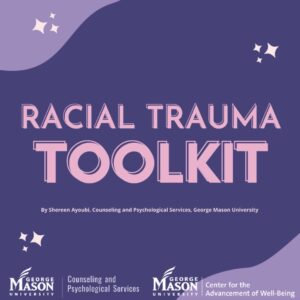 |
Racial Trauma Toolkit by George Mason University
This Racial Trauma Toolkit was created by Mason’s Counseling and Psychological Services in collaboration with Mason’s Center for the Advancement of Well-Being. The goal of this toolkit is to raise awareness about, and encourage healing from, experiences of racial trauma. This toolkit is not an alternative to mental health treatment, but rather is an adjunctive means of support.
|
 |
A Letter to All Who Have Lost in This Era by Anand Giridharadas
Summer, 2016: amid populist revolts, clashing resentments and fear, writer Anand Giridharadas doesn’t give a talk but reads a letter. It’s from those who have won in this era of change, to those who have, or feel, lost. It confesses to ignoring pain until it became anger. It chides an idealistic yet remote elite for its behind-closed-doors world-saving and airy, self-serving futurism — for at times worrying more about sending people to Mars than helping them on Earth. And it rejects the exclusionary dogmas to which we cling, calling us instead to “dare to commit to the dream of each other.”
|
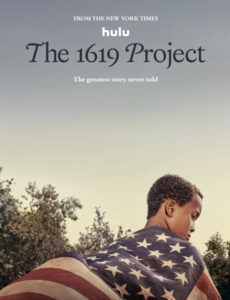 |
The 1619 Project by Nikole Hannah-Jones
Hulu’s six-part 1619 Docuseries is an expansion of “The 1619 Project” created by Pulitzer Prize-winning journalist Nikole Hannah-Jones and the New York Times Magazine. The series seeks to reframe the country’s history by placing the consequences of slavery and the contributions of Black Americans at the very center of our national narrative.
|
 |
The Difference Between Being “Not Racist” and Antiracist by Ibram X. Kendi
There is no such thing as being “not racist,” says author and historian Ibram X. Kendi. In this vital conversation, he defines the transformative concept of antiracism to help us more clearly recognize, take responsibility for and reject prejudices in our public policies, workplaces and personal beliefs. Learn how you can actively use this awareness to uproot injustice and inequality in the world — and replace it with love.
|
 |
Black/African American Mental Health and Wellness by National Alliance on Mental Illness
What happens at the intersection of mental health and one’s experience as a member of the Black community? While the experience of being Black in America varies tremendously, there are shared cultural factors that play a role in helping define mental health and supporting well-being, resiliency and healing. Explore this further and find many useful strategies and resources, courtesy of the National Alliance on Mental Illness.
|
 |
Talking About Race by National Museum of African American History & Culture
Looking for some basic information about race, how to talk constructively about it, and how to further your commitment to equity? National Museum of African American History & Culture provides several useful tools and guidance to empower your journey and inspire conversation.
|
 |
So You Want to Talk About Race by Ijeoma Oluo
Ijeoma Oluo is one of the most influential people in Seattle, according to Seattle Magazine. She’s also the Editor-At-Large at The Establishment – a media platform run and funded by women. In her new book “So you want to talk about race”, she demonstrates that her remarkable writing abilities by bringing clarity and insight to hyper-charged issues facing America. She discusses why it’s so hard talk about race and why we must do it anyway.
|
 |
The Danger of Silence by Clint Smith III
“We spend so much time listening to the things people are saying that we rarely pay attention to the things they don’t,” says poet and teacher Clint Smith. A short, powerful piece from the heart, about finding the courage to speak up against ignorance and injustice.
|
 |
How I Learned to Stop Worrying and Love Talking About Race by Jay Smooth
Jay Smooth is host of New York’s longest running hip-hop radio show, the Underground Railroad on WBAI 99.5 FM in NY, and is an acclaimed commentator on politics and culture. In this talk, he discusses the sometimes thorny territory of how we discuss issues of race and racism, offering insightful and humorous suggestions for expanding our perception of the subject.
|
 |
We Need to Talk About an Injustice by Bryan Stevenson
In an engaging and personal talk — with cameo appearances from his grandmother and Rosa Parks — human rights lawyer Bryan Stevenson shares some hard truths about America’s justice system, starting with a massive imbalance along racial lines: a third of the country’s black male population has been incarcerated at some point in their lives. These issues, which are wrapped up in America’s unexamined history, are rarely talked about with this level of candor, insight and persuasiveness.
|
 |
Ally to Accomplice by University of Pittsburgh
All accomplices are allies, but not all allies are accomplices. While an ally is willing to stand in support of a marginalized voice, risk is rarely involved. An accomplice uses the power and privilege they have to challenge the status quo, often risking their physical and social well being in the process. Learn more about each in this engaging collection of videos and tutorials, compiled by the University of Pittsburgh.
|
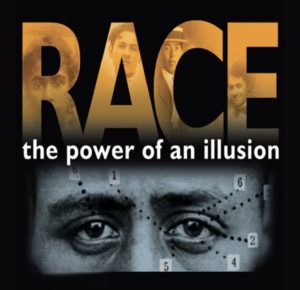 |
RACE: The Power of An Illusion video series – available for streaming ($2.99 per episode)
Companion website with additional clips and other resources: https://www.racepowerofanillusion.org/
The division of the world’s peoples into distinct groups – “red,” “black,” “white” or “yellow” peoples – has became so deeply imbedded in our psyches, so widely accepted, many would promptly dismiss as crazy any suggestion of its falsity. Yet, that’s exactly what this provocative, new three-hour series by California Newsreel claims. Race – The Power of an Illusion questions the very idea of race as biology, suggesting that a belief in race is no more sound than believing that the sun revolves around the earth.
|
 |
Charlotte Mecklenburg Library – BE: Black Entrepreneurs Series
The BE: Black Entrepreneurs Series features weekly interviews with local Black owned businesses in an effort to create community awareness.
|
 |
Rumble: The Indians Who Rocked the World
“Rumble: The Indians Who Rocked the World” is an award-winning feature documentary about the role of Native Americans in popular music history. The film features musical icons such as Charley Patton, Buffy Sainte-Marie, Jimi Hendrix, Redbone, and more.
|
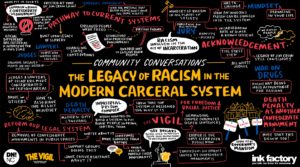 |
The Legacy of Racism in the Carceral System
This is a recording of the Fair Chance Criminal Justice Project’s Community Conversation on the Legacy of Racism in the Carceral System. The conversation series is part of the annual Vigil for Freedom and Racial Justice (https://www.decarceratenownc.com). The discussion was led by Quisha Mallette, Noel Nickle, Alfred Rivera, and James Williams Jr.
|
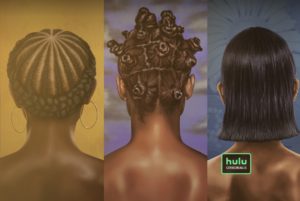 |
The Hair Tales
From executive producers Tracee Ellis Ross and Michaela Angela Davis, “The Hair Tales” leads the audience through a revelatory journey of connecting the personal tales of phenomenal Black women to broader societal and historic themes. The stories shared in the series offer an honest and layered look into the complex culture of Black hair and ultimately Black women’s identity, creativity and contributions to society. Hair tales features stories from Oprah Winfrey, Issa Rae, Chlöe Bailey, Congresswoman Ayanna Pressley, Marsai Martin and Chika.
|
 |
Freedom House Ambulance: The FIRST Responders
In 1967, Pittsburgh’s inner city produced America’s first EMT service. Comprised solely of Black men and women recruited from the city’s Hill District neighborhood, the paramedics of Freedom House Ambulance became trailblazers in providing pre-hospital and CPR care. Freedom House was initially conceived to respond to the needs of Pittsburgh’s African American community who often times, couldn’t rely on police and fire departments during an emergency. Their ground breaking work became the basis for all paramedics training in the country. However, despite its success – racism and power dynamics in Pittsburgh shut down Freedom House in 1975, leaving its legacy almost lost to history. This 30-minute documentary explores the rise and fall of Freedom House Ambulance. With rare archival images, the program features the story of inception from an original founder, compelling reflections of surviving paramedics, stories of the world-renowned doctors who trained them, and memories of lifelong Hill District residents. For more information visit https://www.wqed.org/freedomhouse.
|
 |
The Bias Inside Us
The Bias Inside Us is a community engagement project featuring a Smithsonian traveling exhibition, the centerpiece for local programs and activities that raise awareness about the science and history of bias and what people can do about it. On this website, you’ll find resources for teachers, communities and individuals to learn more about implicit bias. The project is grounded in research and teaches us that bias is inside everyone. It is part of being human.
|
 |
Charlotte Downtown: Do or Die
WBTV reports on the status of Downtown Charlotte in the 1960s.
|
Sustaining Sponsors


Connect


